Datong Ancient City: a local guide
Datong is one of China's old capitals — capital of the Northern Wei dynasty, then a companion capital of the Liao and the Jin. The old city inside the Ming wall is where that history still stands: two great Liao temples, a Ming wall you can walk, and a nine-dragon screen that outlived the palace it once guarded. Plan half a day in the old city itself, and stay for the night lights — the wall after dark is the sight most visitors remember.
The wall
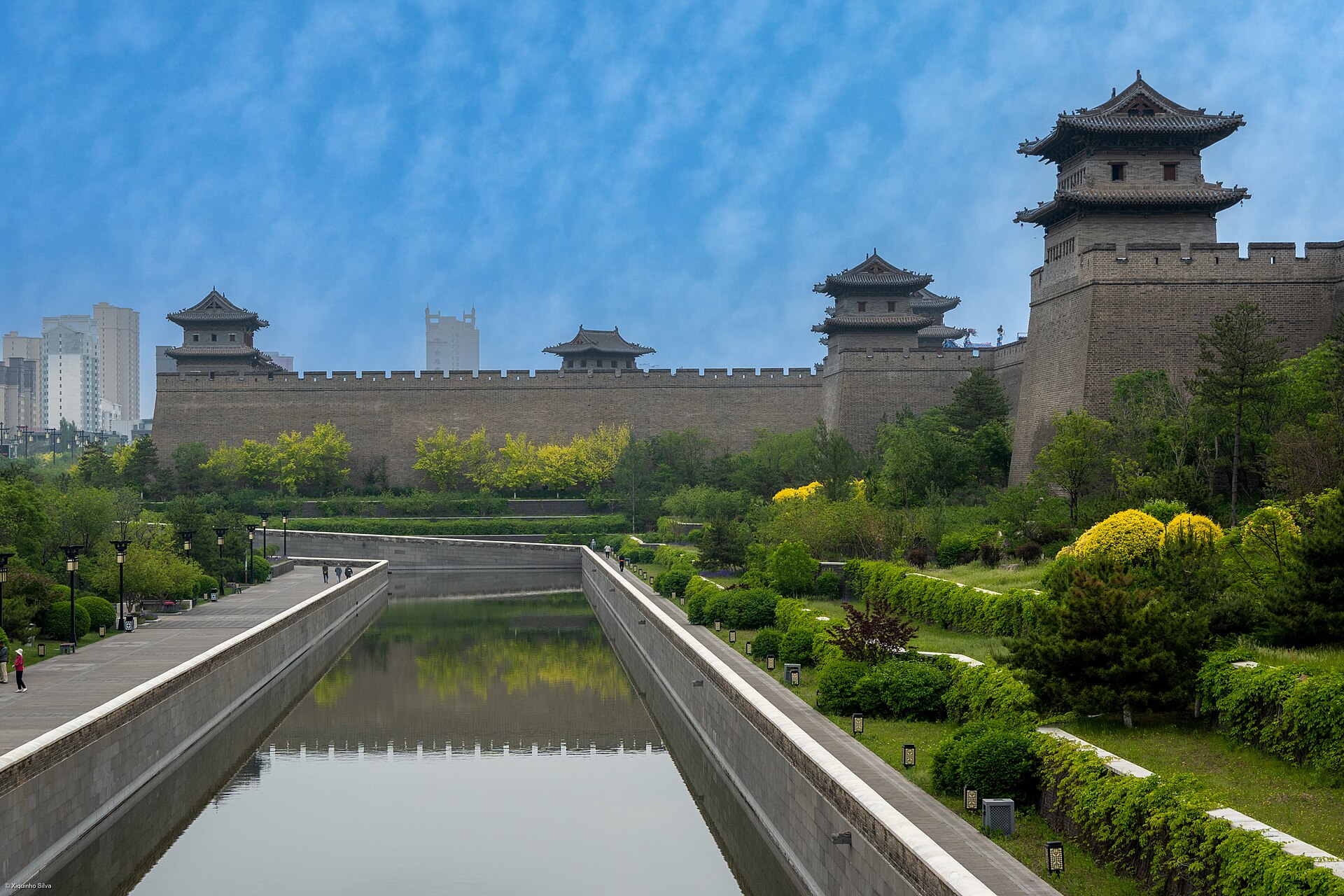
The wall is the real thing: a Ming wall, built in the Hongwu reign on the rammed-earth core of earlier walls, running in a great rectangle around the old city. Walk the top and you get the whole city at your feet — the temple roofs inside, the towers at the corners, and the plain stretching away outside. Go up at the south gate, where the towers are at their most impressive, and walk toward the sunset. After dark the wall is lit up, and it is one of the best city-wall night views in China — the reason most visitors spend the evening here rather than anywhere else.
What to see inside the walls
- Huayan Temple — the great Liao temple in the middle of the old city, with its two treasure halls. The single most important building inside the walls.
- Shanhua Temple — the other Liao–Jin original, a short walk from Huayan Temple: Jin painted sculptures, a hall roofed on just four great pillars, and a Song-dynasty stele with a remarkable story.
- The Nine-Dragon Screen — a Ming glazed screen of nine dragons, the largest and oldest of China's three nine-dragon screens. It once stood before Prince Dai's Mansion, and it is the one piece of the palace that survived the fire that destroyed the rest.
- Prince Dai's Mansion — the rebuilt Ming princely palace, red walls and peacock-blue tiles, at its best in the evening light.
- Drum Tower and Bell Tower — the old city's timekeepers, standing over the crossroads at the centre. Climb the Drum Tower for a view down the old streets.
- The city walk — Bell Tower, Four Archways, Drum Tower, Confucius Temple, then up onto the wall. The old city is small enough to walk end to end, and the streets between the sights are part of the visit: noodle shops, vinegar sellers and the everyday life of a northern city.
- Datong Museum — in the old city, a good place to put the whole story together: Northern Wei pottery figures, the blue glass bowl, and the city's history from the Warring States to the Ming.
Originals and rebuilds — a straight note
Datong's old city is not a perfectly preserved old town — that is Pingyao, further south. Here the history is real but selective: the wall is Ming, the two temples are Liao and Jin originals, the Nine-Dragon Screen is Ming, and much of the rest — the streets, the shops, the prince's mansion — was rebuilt in recent years. We say this plainly because it helps you spend your time well: go for the wall and the two temples, walk the old streets in the evening, and leave the rest to the photographs.
Food and the evening
Datong eats northern food: knife-cut noodles, shaomai — open-topped steamed dumplings, a breakfast classic here — and cold jelly noodles in summer. Eat in the old streets around the Drum Tower, then walk the wall as the lights come on. See our Shanxi food guide for what to order in each town.
Frequently asked questions
How long do I need in Datong Ancient City?
Half a day covers the temples and a walk along the wall; a full day lets you take the old city slowly, including the museum and the wall at night. Most visitors stay one night in Datong and see the grottoes the next day.
Is Datong Ancient City original or rebuilt?
Both, and it is worth knowing which is which. The city wall is a genuine Ming wall, built on the rammed-earth core of earlier walls. Huayan Temple and Shanhua Temple are Liao and Jin originals. Much of the rest of the old city — streets, shops and the prince's mansion — was rebuilt in recent years. Go for the wall and the two temples; that is where the history is.
When is the best time to walk the wall?
Late afternoon into the evening. The corner towers catch the sunset, and after dark the wall is lit up — it is one of the best city-wall night views in China. Go up at the south gate, where the towers are at their most impressive.
How does the old city fit with the Yungang Grottoes?
They are the two halves of a Datong visit: the grottoes are outside the city, in the hills to the west, and the old city is where you sleep, eat and walk in the evening. Most visitors see the grottoes in the morning and spend the afternoon and evening inside the walls.
Plan your private trip
Tell us your dates and party size — we reply within 24 hours with a draft route and a clear quotation. Every tour is private, with an English-speaking guide and a private driver.
Datong Ancient City is the base for our 4-day Datong & Pingyao tour (from US$999 per person), our 5-day Datong, Mount Wutai & Pingyao tour (from US$1,026 per person) and our 6-day Seoul route (from US$1,299 per person). Pair it with the Yungang Grottoes and the Hanging Temple and Mount Heng. To plan a private Datong visit, email us at 18635571515@163.com or message us through the Jinji Yousheng (晋迹有声) WeChat mini program.