Prince Dai's Mansion: a local guide
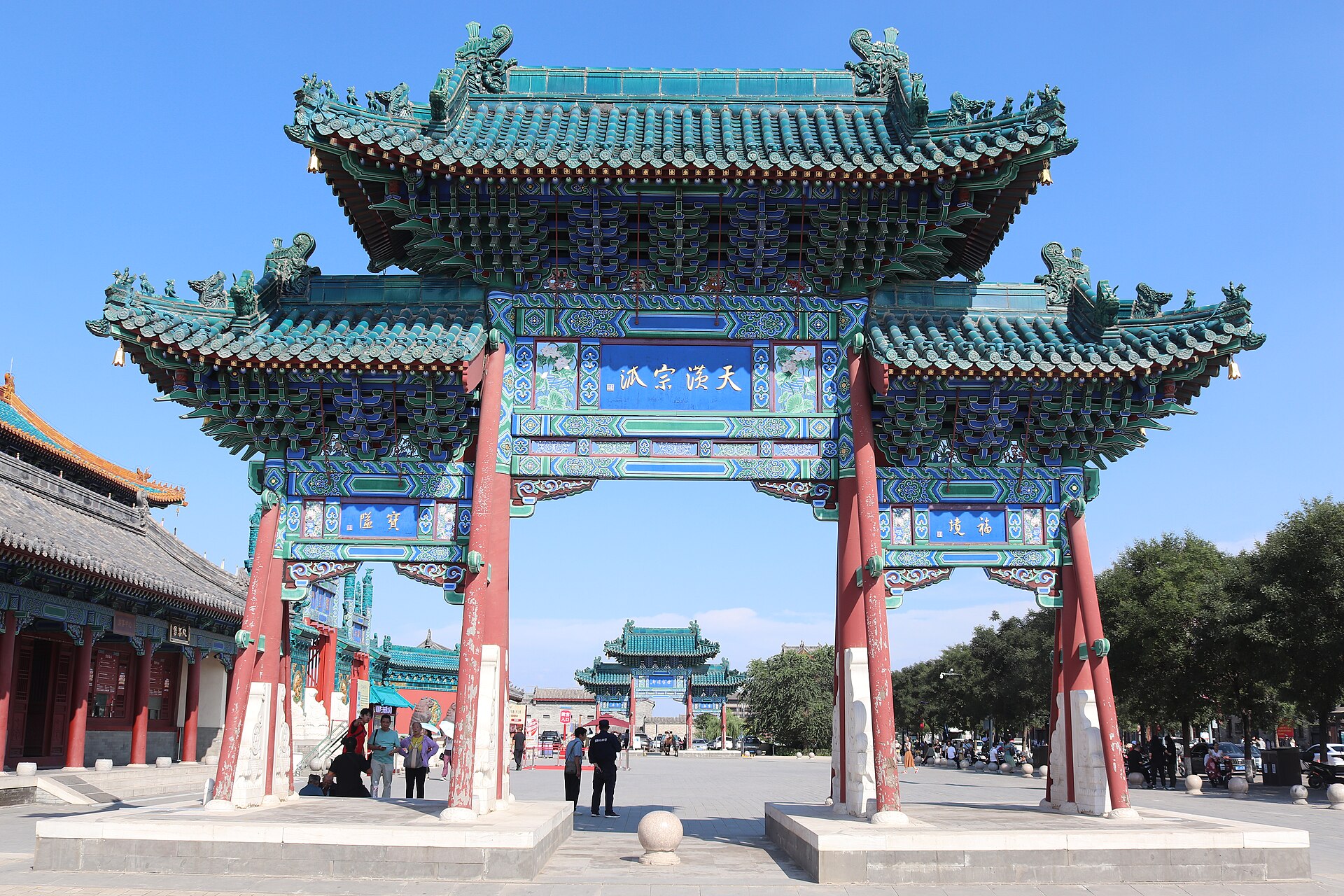
Prince Dai's Mansion is the great palace of Datong Ancient City — a Ming princely mansion built for the emperor's thirteenth son, burned to the ground in 1644, and rebuilt on its original site in our own time. It is the brightest building in the old city: red walls, peacock-blue glazed tiles, and a great central axis of halls. Come for the colour, the scale, and the screen across the street — and come in the evening, when the palace is at its best.
The palace and the prince
The mansion was built in 1392 for Zhu Gui, the thirteenth son of the Ming dynasty's founding emperor, Zhu Yuanzhang, who was given the princedom of Dai and sent to hold Datong. His father built him a palace to the scale of an imperial palace — modelled on the palace in Nanjing, with a central axis of great halls running from south to north, side courtyards for the household, temples and altars, and hundreds of rooms behind high walls. It was one of the grandest princely palaces in China, and it stood at the heart of the old city for two and a half centuries. In 1644, when rebels took Datong, the palace burned — and of the whole vast compound, only one thing survived: the Nine-Dragon Screen that had stood before it as its spirit wall.
What you see today
The palace you walk through now is a reconstruction, rebuilt from 2011 on the original site, following the Ming layout. The main buildings of the central axis are finished — hall after hall in a line, seven deep, with the great Chengyun Hall at the centre — and the side buildings are still being completed. It looks new, because it is new: the red walls are bright, the blue tiles are vivid, and the whole place has the fresh, sharp colour of a building that has not yet weathered. That is worth saying plainly, because it is also the reason the mansion photographs so well. Walk the central axis slowly, from the outer gates to the great hall, and look up at the roof ridges and the painted brackets. Take a guide if one is offered — the palace is a story about Ming princes, and it reads better with someone to tell it.
The Nine-Dragon Screen
Across the street from the mansion stands the one original piece of the palace: the Nine-Dragon Screen, built in 1392. It is a great glazed wall of nine dragons, the largest and oldest of China's three nine-dragon screens — the others are in Beijing, at the Forbidden City and Beihai Park — and it is the reason to come to this corner of the old city. The screen was the mansion's spirit wall, set before the gates to turn away bad spirits and prying eyes, and it survived the fire that took everything behind it. You can see it from the street without going in anywhere, and it repays a close look: nine dragons in glazed tile, each one different, swimming through clouds over a sea.
The evening
Come in the evening. The red walls and blue tiles are at their most vivid in the late light, and the mansion's night performances are the reason many visitors come after dark — including the iron-flower show, in which molten iron is thrown against a wall in a shower of sparks, an old blacksmith's craft turned into theatre. The mansion is at its best with the lights on, and it pairs naturally with a walk along the city wall afterwards.
Frequently asked questions
Is Prince Dai's Mansion original?
The palace you see is a reconstruction, rebuilt from 2011 on the original site. The original mansion, built in 1392, burned down in 1644 when rebels took Datong. The one piece of the original palace that survived is the Nine-Dragon Screen across the street — and it is the reason to come.
Who was Prince Dai?
Zhu Gui, the thirteenth son of the Ming dynasty's founding emperor, Zhu Yuanzhang. He was given the princedom of Dai and sent to Datong in 1392, and his palace was built to the scale of an imperial palace — modelled on the palace in Nanjing, with a central axis of great halls and hundreds of rooms.
What is the Nine-Dragon Screen?
A Ming glazed screen of nine dragons that once stood before the mansion as its spirit wall. Built in 1392, it is the largest and oldest of China's three nine-dragon screens, and the only part of the palace to survive the fire of 1644. It stands across the street from the rebuilt mansion.
When is the best time to visit?
In the evening. The red walls and peacock-blue tiles are at their most vivid in the late light, and the mansion's night performances — including the iron-flower show, where molten iron is thrown against a wall in a shower of sparks — are the reason many visitors come after dark.
Plan your private trip
Tell us your dates and party size — we reply within 24 hours with a draft route and a clear quotation. Every tour is private, with an English-speaking guide and a private driver.
Prince Dai's Mansion is a stop on our 4-day Datong & Pingyao tour (from US$999 per person), our 5-day Datong, Mount Wutai & Pingyao tour (from US$1,026 per person) and our 6-day Seoul route (from US$1,299 per person). See it with Datong Ancient City and Huayan Temple. To plan a private Datong visit, email us at 18635571515@163.com or message us through the Jinji Yousheng (晋迹有声) WeChat mini program.