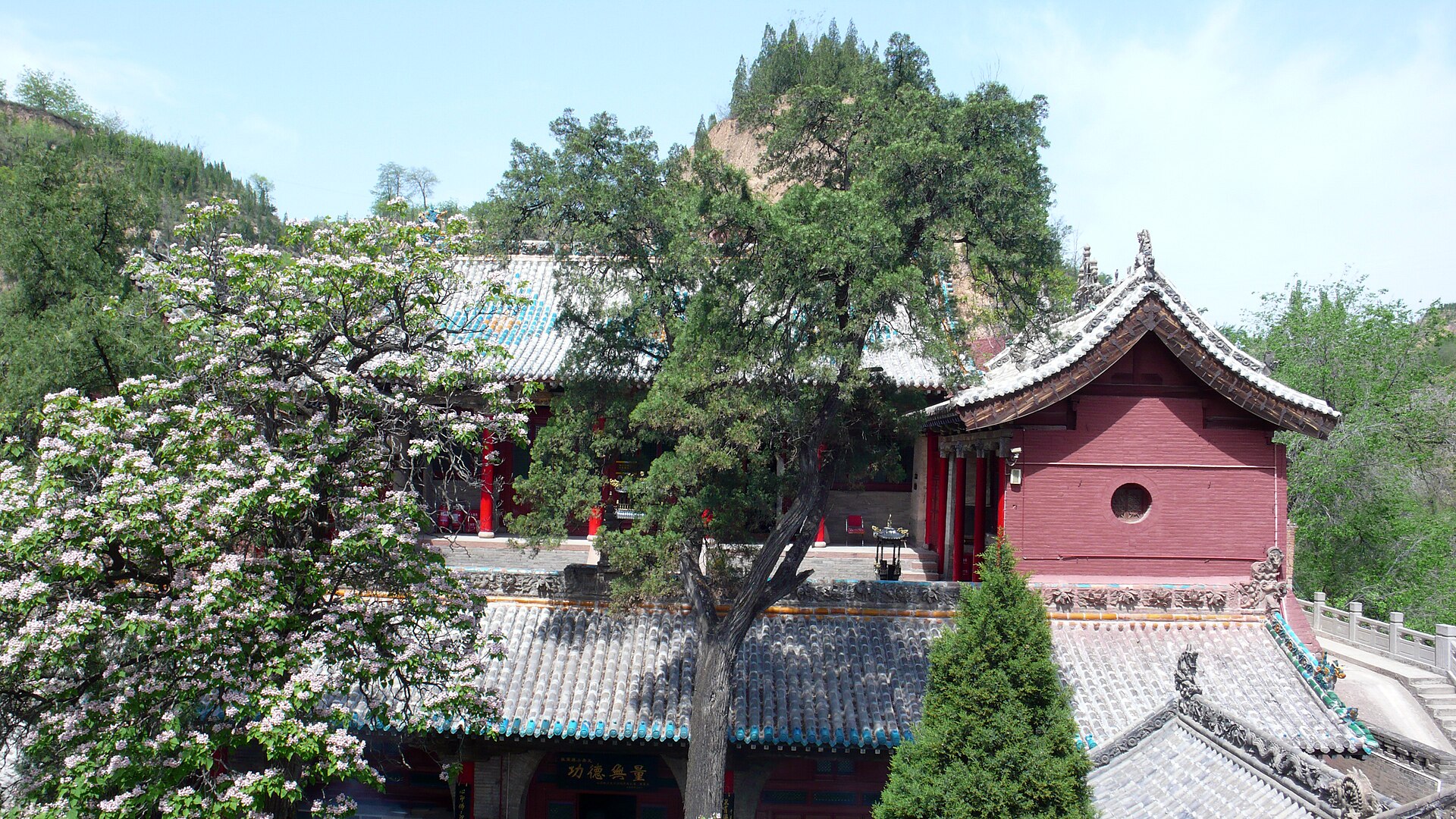
Xiaoxitian: a local guide
Xiaoxitian — the "Little Western Heaven" — is a small Ming temple on a hill in Xixian, and its main hall holds one of the wonders of Chinese art: nearly two thousand painted hanging sculptures, layered to the dome of a single small hall. It is a quiet place, far from the famous sights, and the hall inside is unlike anything else in China. Plan a morning here, and arrive early — the first light through the door is the best moment of the day.
The hall of hanging sculptures
The main hall is small — under 170 square metres — and it is full. Nearly 2,000 Ming-dynasty sculptures hang from its walls and ceiling in layers that rise to the dome: five shrines holding the great Buddhas, ten disciples standing at their sides, heavenly kings and guardian warriors, and above them a whole heaven of flying apsaras, sacred birds and musician bodhisattvas playing in the clouds. The figures run from a great Buddha more than three metres tall down to novice monks the size of a thumb, and every one of them is painted and gilded. They were made from the local red clay, mixed with straw, hemp paper and egg white, then gilded and polished — and each figure is tilted slightly forward, so that dust cannot settle on it and the whole hall seems to lean toward you. It is called the last great work of hanging-sculpture art, and the hall is sometimes called China's museum of the art. Stand in the middle of it and the ceiling disappears into Buddhas.
The temple on the hill
Xiaoxitian was founded in 1629, in the Ming dynasty, by a Chan master. It was first called the Thousand-Buddha Temple, for the thousand Buddhas in its main hall, and renamed for the words carved over its gate — "the way into the Western Heaven" — and to set it apart from another Ming temple, the Great Western Heaven, south of the town. The temple is laid out like a phoenix, so the story goes: the front courtyard is the head, the middle the back, the rear the tail. You climb stone steps from the foot of the hill, pass through a gate cut into the rock, and come out into the courtyards above. Come with the first entry of the day, when the morning light comes through the door and falls across the sculptures — it is the one moment the hall is lit by the sun, and it is worth the early start.
Practical notes from our guides
- Bring binoculars. Many of the figures are small and high up, and the hall is dim. Binoculars turn a blur of gold into individual faces, instruments and animals.
- Use the audio guide in the hall. It explains the stories the sculptures tell — who the figures are, and what is happening on each wall. Without it, the hall is beautiful but unreadable.
- Take your time. The hall is small and the light is dim, and the sculpture repays a slow look. A couple of hours here is time well spent, not time wasted.
- Come early. The temple became much better known after the game Black Myth: Wukong drew on Shanxi's temples, and it can be busy on holidays. On an ordinary day it is quiet, and the first light is the reward for an early start.
How it fits a route
Xiaoxitian is in the south of the province, near Linfen, and it pairs naturally with Guangsheng Temple in Hongdong — the two great temple sights of the south — and with Hukou Waterfall on the Yellow River. It is a custom addition to the southern route rather than a stop on the ready-made tours, and it belongs on any itinerary built for people who love old art. See it as part of our 7-day Shanxi Panorama, or ask us to build it into a custom southern route.
Frequently asked questions
Where is Xiaoxitian?
In Xixian County, near Linfen in southern Shanxi, on Phoenix Mountain west of the county town. It is a small Ming-dynasty temple on a hill, reached by climbing stone steps through a rock-cut gate.
What are the hanging sculptures?
Nearly 2,000 painted clay sculptures from the Ming dynasty, fixed to the walls and ceiling of the main hall in layers that rise to the dome. Buddhas, disciples, heavenly kings, flying apsaras and musician bodhisattvas — a whole heaven, packed into a hall of under 170 square metres.
How long do I need at Xiaoxitian?
About two hours. The temple is small, but the main hall deserves a slow look — bring binoculars, because many of the figures are small and high up. Arrive early, when the first light comes through the door.
Is Xiaoxitian very crowded?
It became much better known after the game Black Myth: Wukong drew on Shanxi's temples, and it can be busy on holidays. On an ordinary day it is quiet. Come early in the morning and you may have the hall almost to yourself.
Plan your private trip
Tell us your dates and party size — we reply within 24 hours with a draft route and a clear quotation. Every tour is private, with an English-speaking guide and a private driver.
Xiaoxitian is a custom addition to our 7-day Shanxi Panorama (from US$1,599 per person). See it with Guangsheng Temple and Hukou Waterfall. To plan a private southern Shanxi visit, email us at 18635571515@163.com or message us through the Jinji Yousheng (晋迹有声) WeChat mini program.